
I’ve written before about what supplements are recommended for babies and toddlers. I’ve also written a post comparing nutritional supplements for babies and toddlers.
🔥 Produits recommandés : Canon EOS R6 II • DJI Mini 4 Pro • MacBook Pro M4
In this blog, I wanted to focus specifically on one nutrient in particular – vitamin C for babies and toddlers.

Why does my child need vitamin C?
Vitamin C is needed for a variety of functions within the body, including:
- Protecting damage to cells
- Forming collagen (a protein that supports the normal function of bones, gums, teeth and skin)
- Supporting immune function
- Producing key hormones and neurotransmitters to support the healthy function of the nervous system
Vitamin C also helps our bodies absorb iron. Iron from plant-based foods such as beans and pulses, is absorbed less efficiently than iron from animal sources, such as meat and fish. Eating foods containing vitamin C alongside plant-based sources of iron helps to ensure more iron is absorbed. You can read more about iron for mum and baby in my blog.
How much vitamin C does my little one need?
The table below shows the daily recommended intake for vitamin C from birth to 10 years.
| Age | Daily Recommended Vitamin C Intake (mg) |
| 0-12 months | 25 |
| 1-10 years | 30 |
Our bodies don’t store vitamin C, which means that we need to get it from the foods we eat, or through supplements. Government recommendations are that all children from 6 months to 5 years should be given a daily supplement containing vitamin C.
If your baby is having more than 500ml of formula per day, then it’s not necessary to offer a supplement. This is because infant formula is already fortified with vitamin C.
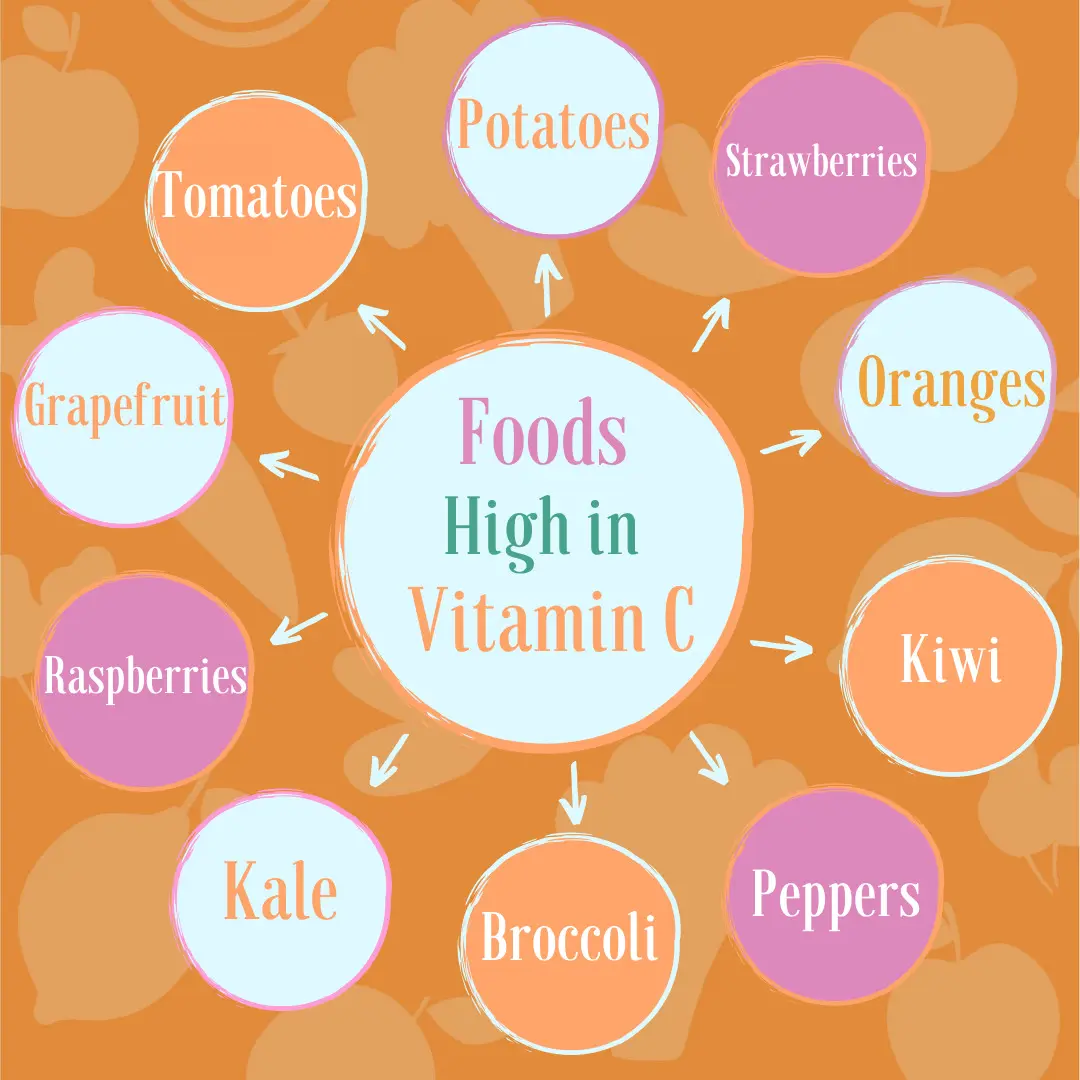
What foods are high in vitamin C?
The graphics below show which foods contain vitamin C and how much they contain per 100g.
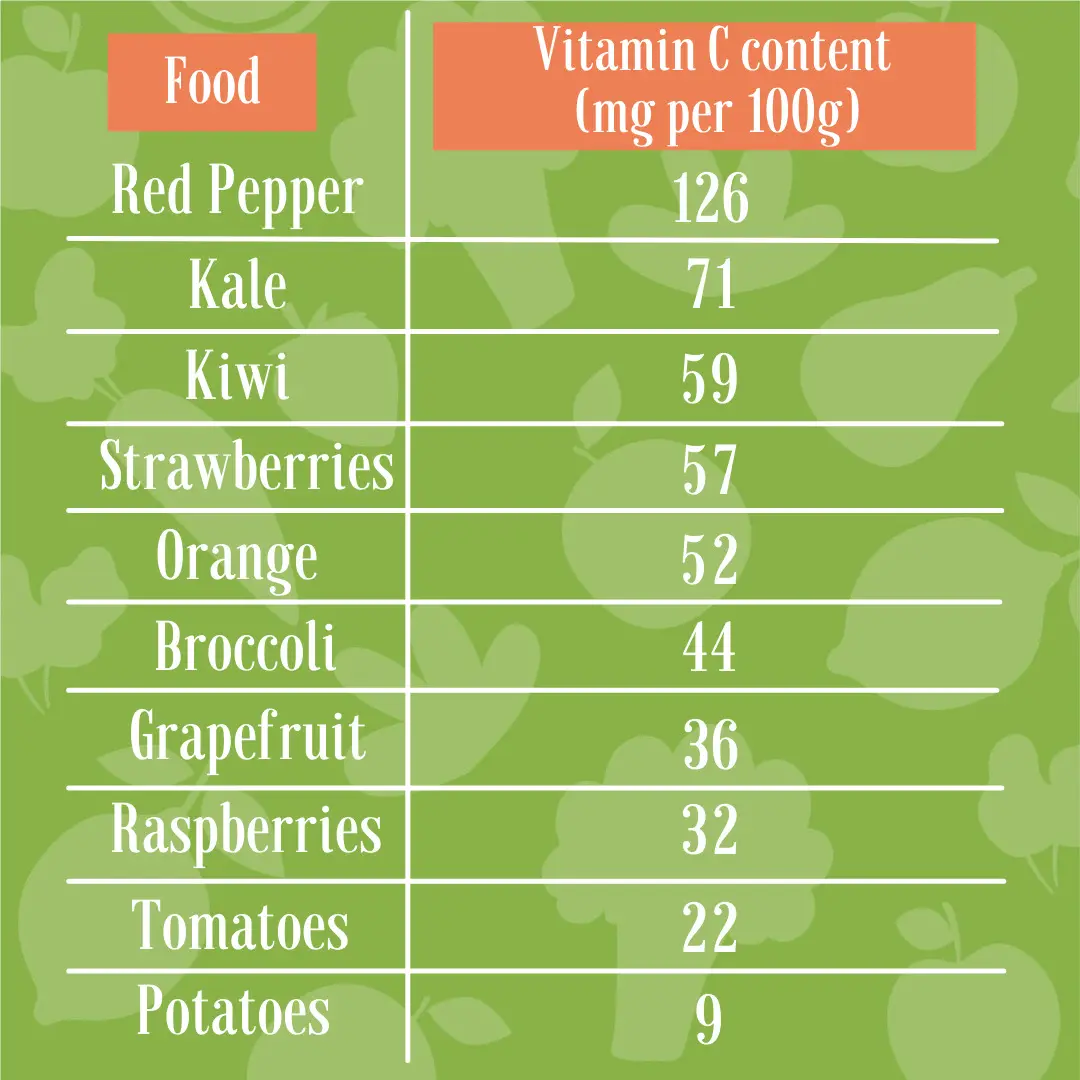
To put the numbers above into context, the table below shows how much vitamin C is in a typical portion of the foods above:

So that shows that in just one average portion of pepper, kale, orange or broccoli, your little one can meet their daily vitamin C requirements! Even if your little one is having smaller than average portions, by offering a variety of these foods throughout the day and week, they are more than likely to meet their vitamin C requirements with food!
Can my child have too much or too little vitamin C?
Vitamin C deficiency is quite rare in the UK, as it is readily available in many common foods. However, babies and children can be at higher risk of deficiency, if they have a limited diet without many foods rich in vitamin C.
Symptoms of vitamin C deficiency include fatigue, anaemia, muscle weakness and joint pain. Long-term vitamin C deficiency can cause scurvy, which is a rare condition – according to NHS data – in 2021 there were just 6 hospital admissions for scurvy. In children, vitamin C deficiency can cause problems with developing bones.
Having more vitamin C than the recommended intake is not considered harmful. However, taking too much vitamin C in the form of supplements – more than 1000mg daily, can cause some short-term symptoms including stomach pain, diarrhoea and gas.
Does my child need more vitamin C when they’re sick?
You may have heard that vitamin C can help fight off colds or help you to recover more quickly from the common cold. There’s no evidence that vitamin C can prevent the common cold, although there is some evidence that it can reduce the length and severity of symptoms.
Vitamin C plays an important role in supporting our immune system, and during infection, it can become depleted in the body. If you continue to offer a variety of fruits and vegetables, as well as their daily supplement containing vitamin C, it’s more than likely your child will have a sufficient intake of vitamin C.
Remember, it’s quite normal for appetites to be lower when your child is feeling unwell – here are my tips for feeding poorly babies and toddlers, from both my personal and professional experience!
Why is a vitamin C supplement recommended for babies and young children?
Even though it’s quite easy for little ones to reach the recommended intake for vitamin C through foods alone, current guidelines in the UK still recommend that babies from 6 months should be given a daily supplement containing vitamins A, C and D.
This is because certain groups of the population, including children MAY be more at risk of developing vitamin C deficiency due to a limited diet. Therefore, these recommendations are based on ensuring that the most at-risk groups avoid deficiency. These recommendations are currently under review at the moment, so it’s possible they may change in the future!
More blogs on individual nutrients
