
Les routines nous aident à passer efficacement d’un domaine de la vie à l’autre. La fin d’une semaine de travail est une transition qui peut nous stresser et nous submerger, et une mauvaise gestion de cette transition peut rendre le début de la semaine de travail suivante très désagréable.
🔥 Produits recommandés : Canon EOS R6 II • DJI Mini 4 Pro • MacBook Pro M4
Voici une routine efficace que vous pouvez personnaliser et utiliser pour conclure le travail, afin de passer un week-end relaxant et de bien commencer la semaine suivante.
1. Commencez la routine à l’heure du déjeuner le vendredi par une question très importante.
Voici la question : Qu’est-ce que j’aurai l’IMPRESSION de faire avant le week-end ?
Votre réponse ne devrait comporter qu’un ou deux éléments, et non une liste complète de choses à faire. Il ne vous reste qu’un après-midi, mais si vous vous concentrez, vous pouvez abattre du bon travail avant l’heure de la fermeture.
Pour vous aider à y parvenir, limitez vos activités sociales au travail le vendredi. Tout le monde veut passer en mode week-end, et c’est compréhensible ; mais il vaut mieux rester concentré au travail pendant quelques heures que de gaspiller l’après-midi dans des activités improductives. De toute façon, vous serez toujours au travail ; autant accomplir quelques tâches et aborder le week-end avec le sentiment d’avoir accompli quelque chose de bien.
2. Travaillez dur sur la réponse à cette question pendant les prochaines heures.
Stay as focused as you can and avoid distractions as much as possible. Remind yourself that you are prepping for a great weekend, and you’re going to enjoy it. You’ll enjoy it even more by focusing and using your hours at work well.
3. About an hour before quitting time, wrap up the task you’ve been working on.
Wherever you are on that task, find a stopping point, even if the task or project you’re working to accomplish is not yet complete.
Many, many tasks and projects are going to span multiple days and even weeks of work. What you should do right now is note the progress you’ve made on this particular task and any ideas or bits of info you’ll want when it’s time to start working on it again.
If you have finished up the task you assigned yourself for the afternoon, great! Wrap up the bits and pieces: papers, open files, and other related items. Don’t leave evidence strewn about or a mess to pick up on Monday.
4. Once you’ve wrapped up your task, update your task list.
Clear or mark off all the tasks you’ve accomplished in the workweek.
Delete any tasks that are no longer relevant; no point in allowing them to take up space on your list.
Delegate any tasks that don’t belong to you, or make a note to do so on Monday.
Move, migrate, or re-assign tasks that still need to be done, depending on how your task management system works.
5. Take a look at your calendar.
Once you’ve update your task list, you need to take five minutes to look at your calendar for the weekend and upcoming workweek.
The first purpose is just to get a quick overview of what’s coming up for you.
The second purpose is to notice anything big looming on Monday or Tuesday that you want to be prepared to handle. There’s nothing more unpleasant than coming in Monday morning only to be surprised by that report that’s due by Monday afternoon, or the big meeting you forgot about.
If you must, assign yourself one or two tasks to do over the weekend to prepare for your Monday events and workload. Clarify exactly what you need to do, and think about what weekend time you can use for those tasks; put it on your weekend calendar, and don’t worry about it until you get to the assigned time. Then focus, get through the tasks, and then get back to enjoying your weekend.
6. Give yourself notes and reminders for starting the next week.
When you’re in the middle of a project, everything is present and fresh. It doesn’t seem like you could forget the ideas and information coursing through your brain when you’re in the midst of the work.
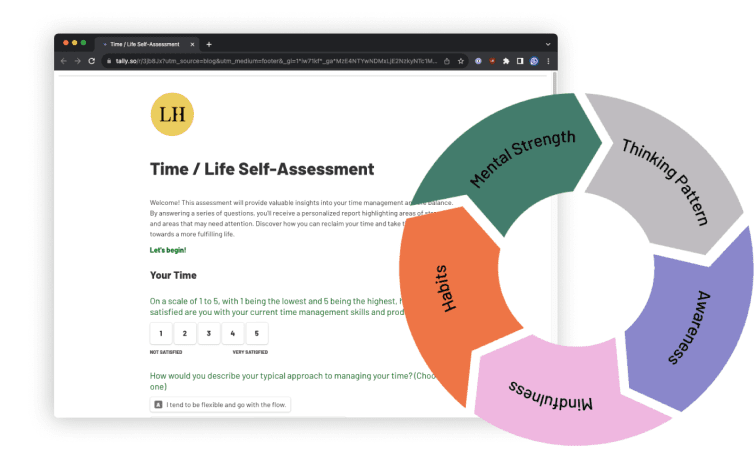
How Balanced is Your Life?
Assess how balanced your life is with our Time/Life Self-Assessment and get a customized report for free.
You will find out your time management strengths, uncover hidden opportunities, and shape your life on your terms.
But weekends come and new information and ideas take up that brain space. Part of why Monday is so difficult is that our brains are working to rewire themselves back to the “work-related” bits of information that are still hanging out in there but not as accessible because they’re buried by all the “weekend-related” stuff.
Do yourself a favor and leave yourself a breadcrumb trail to follow when you get back to work.
- For open projects: leave notes of some kind (physical or digital, whichever works best for the project) regarding the task you were doing, your thoughts on it, where you want to pick up, what you were thinking.
- For calendar items and events: leave information, ideas, reminders, and event details entered into the calendar item so you don’t have to go hunting for them. Set reminders before the calendar event to give yourself a heads up with enough time to do any preparation needed.
7. Wrap up any open communication.
Check your inbox for emails that need to be answered, and answer them quickly. If you need to take time to form your reply, start a response with your initial thoughts, save it as a draft, and mark it in your inbox as a priority so you don’t forget it next week.
Répondre à d’autres modes de communication – appels téléphoniques, textes, messages sur les médias sociaux, etc.
8. Sauvegardez vos fichiers et votre ordinateur.
Exécutez un programme de sauvegarde pour vous assurer que votre travail de la semaine est sauvegardé et qu’il vous attendra à votre retour le lundi.
9. Mettez de l’ordre dans votre espace physique.
Jetez les vieux papiers. Remettez vos fournitures et vos stylos dans le tiroir. Empilez les livres. Classez vos papiers.
Ne vous laissez pas aller au désordre. Vous n’avez pas besoin de créer un havre de perfection, mais vous pouvez créer de l’ordre.
Votre cerveau vous remerciera plus tard.
10. Décompressez à l’approche du week-end.
Les transitions sont difficiles, et les routines y contribuent. Faites d’une activité de décompression la dernière partie de votre routine. L’exercice est probablement la meilleure méthode ; même quelque chose d’aussi simple qu’une promenade dans le quartier ou une série de sauts à cloche-pied peut vous aider à vous débarrasser du travail et à faire le plein d’énergie pour le week-end.
D’autres idées ?
- Écouter de la musique sur le trajet du retour.
- Consacrez 10 minutes à la méditation.
- Faites une petite balade à vélo ou en voiture (si vous travaillez à domicile, vous devrez peut-être vous accorder un « trajet » afin de disposer d’un temps de transition).
- Mettez la musique à fond et dansez !
- S’allonger pour une sieste de 15 minutes.
Vous êtes maintenant prêt pour le week-end. Vous pouvez vous détendre et profiter de votre temps, en sachant que vous avez mis de l’ordre dans vos affaires et que vous êtes prêt à passer une excellente semaine lorsque vous reprendrez le travail.
Crédit photo : Jackal1 via flickr.com