
Les utilisateurs d’ordinateurs portables et personnels veulent en savoir plus sur les dangers ou les avantages potentiels qu’il y a à laisser leur système en marche en permanence. Depuis des décennies, il existe un débat valable et permanent sur la question de savoir s’il faut laisser un ordinateur portable ou un ordinateur en marche ou l’éteindre complètement après l’avoir utilisé. Les deux camps ont des arguments rationnels à faire valoir. Voici quelques informations qui vous aideront à décider si vous allez laisser votre ordinateur allumé, en mode « veille » ou « hibernation », ou si vous allez l’éteindre complètement après l’avoir utilisé.
🔥 Produits recommandés : Canon EOS R6 II • DJI Mini 4 Pro • MacBook Pro M4
Arrêter un ordinateur portable
Vos besoins personnels vous aideront à déterminer si vous devez éteindre votre ordinateur portable ou votre ordinateur, ou le laisser allumé tout au long de la journée et de la nuit. Votre décision doit se fonder sur l’utilisation que vous faites de votre ordinateur portable, sur vos opinions en matière d’économie d’énergie et sur votre acceptation de l’hypothèse selon laquelle la mise sous tension fréquente de votre appareil peut endommager les circuits électroniques et d’autres composants.
Gardez à l’esprit que la probabilité que votre ordinateur portable soit infecté par un virus trouvé sur Internet est plus grande que les dommages causés à votre appareil par le fait de l’éteindre et de le rallumer tous les jours.
Néanmoins, il est important d’éteindre correctement votre ordinateur portable ou votre ordinateur afin d’éviter d’endommager le disque dur et de corrompre vos applications. Ne vous contentez pas de débrancher l’appareil ou d’appuyer sur le bouton d’alimentation lorsqu’il est encore en marche. Utilisez le menu à l’écran de votre ordinateur portable ou de votre ordinateur pour éteindre l’appareil.
Microsoft recommends you may want to turn off your laptop or PC appropriately if you don’t plan to use it for a while. They suggest closing all applications; this will ensure your data is saved. They also advise turning off the laptop or personal computer will keep your unit safe and more secure. In addition, they suggest the next time you use it; your unit will start quickly.
Shutting your laptop off offers some additional benefits. Using your laptop less often can contribute to it lasting longer. Less stress, wear and tear on the electronic components and other hardware in your unit will increase its longevity. However, it’s important to keep it dust-free, clean, and maintained properly.
Turning off your computer or laptop can help lower energy costs to some degree. The amount of wattage the unit draws varies greatly depending on whether it is a laptop or a desktop personal computer. The PC uses more energy because they require a monitor that uses up a lot of power. Additionally desktop power supplies are less resourceful.
The type of work being done on your unit determines how much power it uses. Complex calculations require intensive processing and use up more electricity. On the other hand, browsing the Internet or writing consumes a lesser amount of electricity.
Leaving a Laptop or Computer on
Scientific American reports the U.S. Environmental Protection Agency (EPA) verifies placing a desktop PC in “sleep” mode after a period of inactivity can result in a yearly energy savings of $15 to $45 per computer. The EPA actually breaks down sleep mode into two categories: “system standby” and “hibernate.” System standby wakes up faster, that is, five to 10 seconds compared with 20 or more seconds it takes when in a hibernate mode.
For most people, shutting down their laptop or computer is inconvenient. They don’t like to wait around for the unit to boot up, and it’s always ready to go. In addition, leaving the laptop on allows it to perform necessary routine maintenance while your away, like backups, system maintenance, and software updates.
On the other hand, turning the laptop or computer off cuts down on the fan noise and other unexpected alarms and sounds they’re known for making.
It all comes down to your personal preference and the time you spend on the laptop. For example, if you step away from it to attend a meeting, go to lunch, or any other activity that won’t take up much time, placing the unit in “sleep” or “hibernate” mode may fit your purpose.
In addition, if you’re not in a hurry and don’t mind the anticipation it may create waiting for the unit to boot up, or want to cut down on energy costs, or have environmental concerns about using electricity when not needed, you may want to shut down your laptop until you’re ready to use it again.
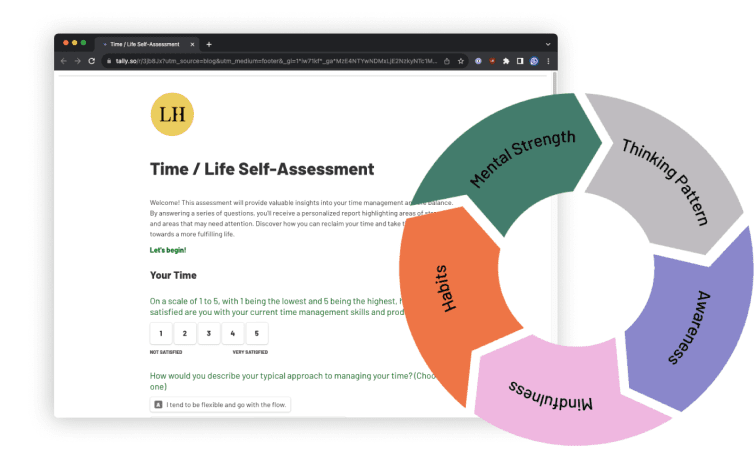
How Balanced is Your Life?
Assess how balanced your life is with our Time/Life Self-Assessment and get a customized report for free.
You will find out your time management strengths, uncover hidden opportunities, and shape your life on your terms.
Another reality to consider is the fact that electronic components fail based on how many hours they are used. We never really know when our laptop or personal computer will fail. For this reason, it’s critical to perform regular backups of your data, pictures, documents, and anything you consider valuable.
Featured photo credit: Laptop-Couch-001-Smile/Bryce Johnson via flickr.com